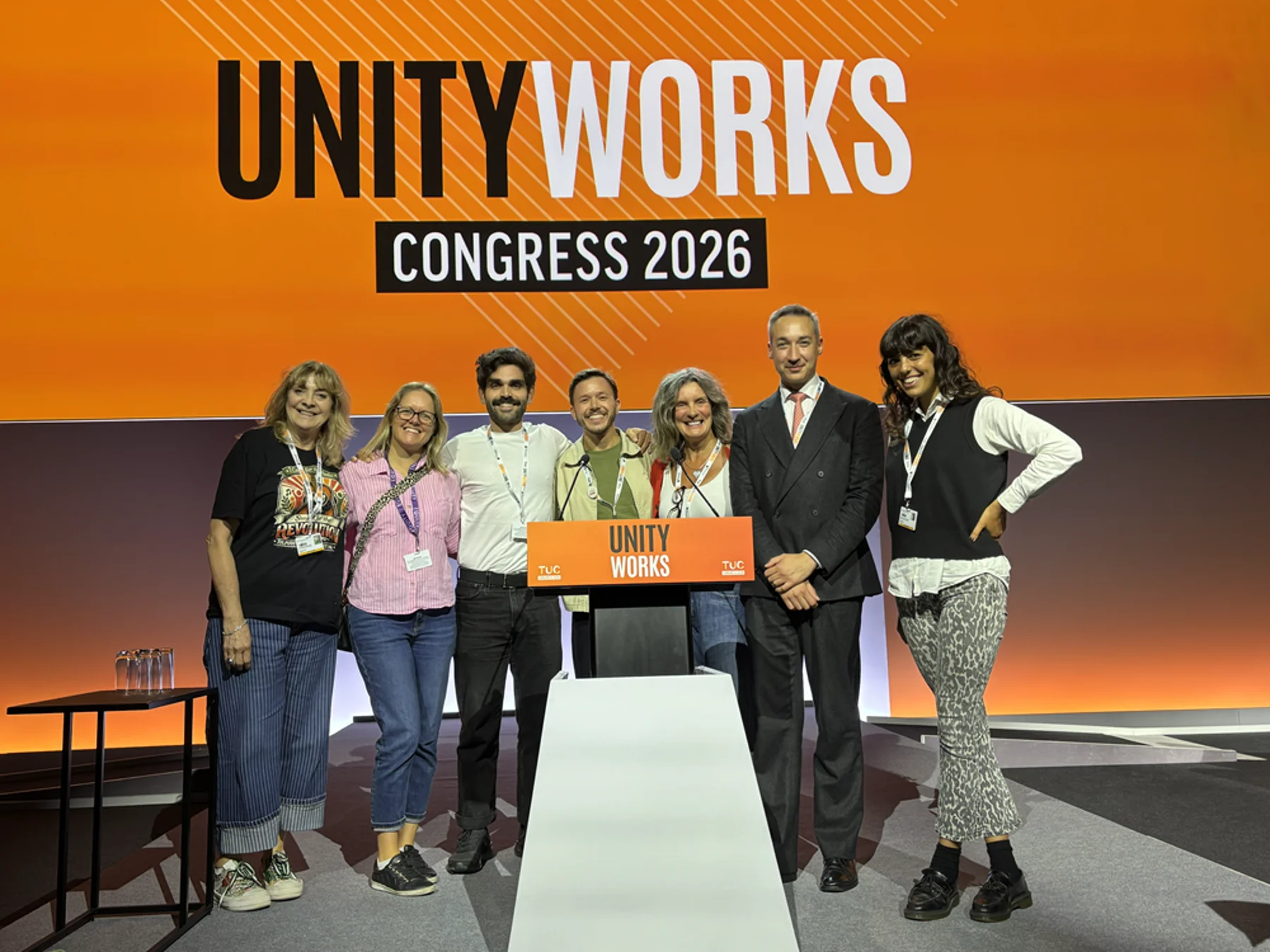
The impact of Artificial Intelligence on jobs, rights for self-employed workers, and tackling the far-right were centre stage at TUC Congress 2026, with Equity speaking in key debates and securing the movement’s support for our key campaigns.
The annual conference of trade unions, which took place in Brighton on 13-16 September 2026, sets the priorities of the wider movement for the next year. Every one of the motions brought by Equity – which were decided by members at Equity’s own annual conference in Durham last May – won the backing of Congress.
Monday
Self-employed workers’ rights
Equity President Lynda Rooke spoke from personal experience while proposing Equity’s motion calling on the TUC to campaign for stronger protections for genuinely self-employed workers. While the motion welcomed the improvements the Employment Rights Act has made, genuinely self-employed workers – including the majority of Equity members – are still missing out on vital rights and protections.
Lynda Rook said: “Once a child is born, self-employed mothers may qualify for maternity allowance, but it’s derisory and deducted from Universal Credit as a benefit - and self-employed fathers get nothing. It happened to my husband; he had to return to work as a theatre director the day after each of our three children were born. Now that was thirty years ago, and nothing has changed.”
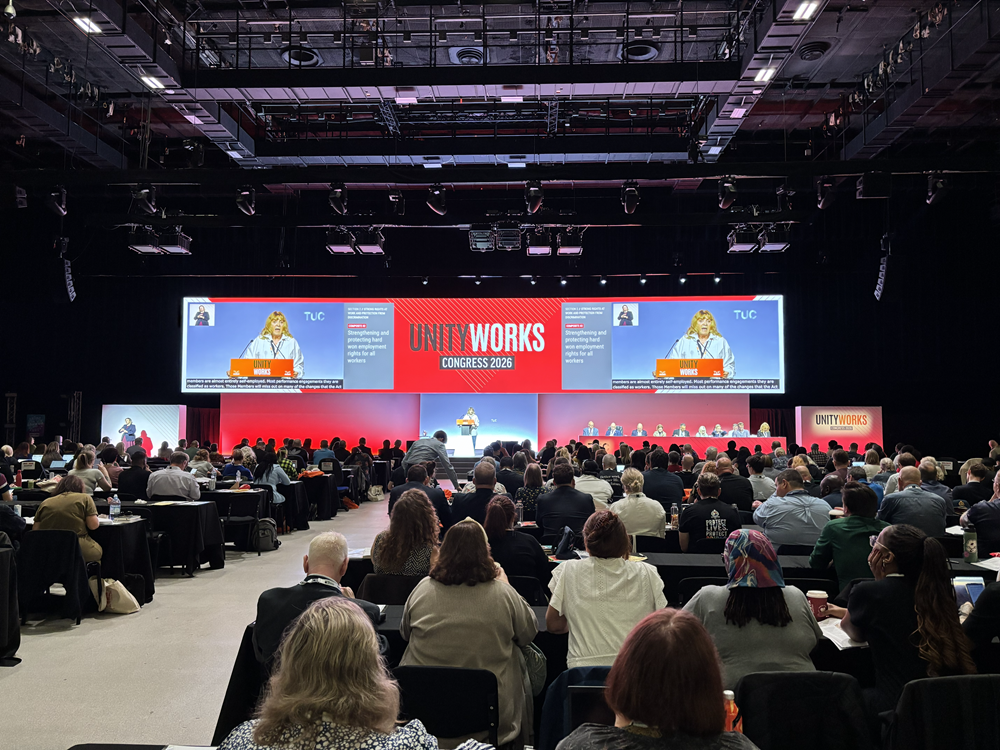
Congress passed the motion, securing the backing of the trade union movement for this vital work.
Watch Lynda's speech on Instagram.
A new economic direction for the UK
A group debate on the future direction of the UK economy called on the prime minister to be bolder and more radical in order to tackle inequality in Britain, evident in crumbling public services; stagnating wages and living standards; poor growth and productivity and growing youth unemployment. The motion, which passed, called on the government to tax wealth and make corporations pay their fair share.
Speaking in support, Equity General Secretary Paul W Fleming highlighted how privatisation and funding cuts had negatively affected every area of economy, from transport to health to theatre, saying: “We have seen over forty years the asset stripping of our state and profiteering in every single corner of our economy. If Labour favours a pro-growth agenda, it will favour a pro –worker agenda and it will favour reversing this trend. It is clear we need to get pounds into the pockets of workers who spend and away from the talons and claws of those who hoard.”
Watch Paul's speech on Instagram.
Tuesday
Public services and cleaning up politics
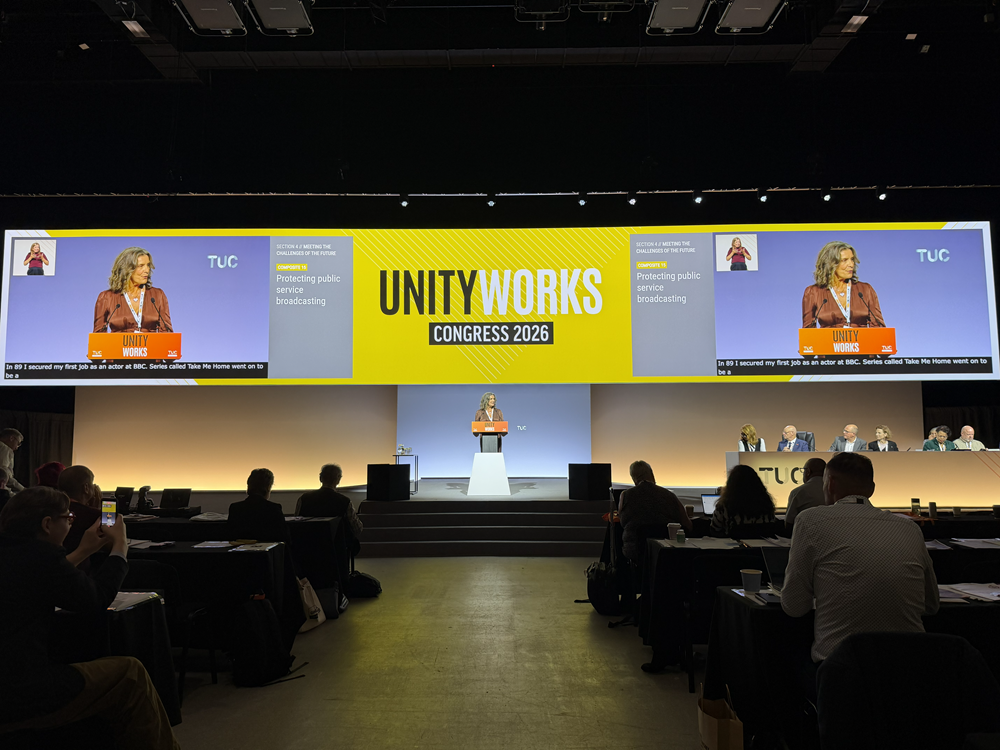
Tuesday kicked off with motions calling for the strengthening of public services. Equity delegate Vivien Parry spoke in support of an NUJ motion demanding action to protect public service broadcasting. She told Congress that her successful career as an actor had “only been possible because of work at the BBC”. She continued, saying: "I want the people coming after me not just to survive, but thrive." The motion, which called on Congress to sound the alarm on BBC cuts and call for urgent government intervention, was carried.
Watch Vivien Parry's speech on Instagram.
Tuesday morning also included a timely motion on cleaning up politics, including a permanent ban on political donations via cryptocurrencies. TUC General Secretary Paul Nowak said, “Our movement will not allow the Americanisation of our politics and the corporate takeover of our democracy.”
Artificial Intelligence
AI was top of the agenda on Tuesday, with several motions calling for increased protections for workers from the impact of AI on their jobs – a testament to the profound impact the technology is already having on workers’ lives and livelihoods.
First up was a motion from the Musicians' Union calling for Congress to back their campaign to Keep Music Live – a response to the increasing use of “Key Comp” AI technology to replace live musicians in touring theatre productions and some West End musicals. Key Comp has been banned on Broadway, in Australia and even in Hamburg where the technology was invented.
Seconding the motion, which won the backing of Congress, Equity’s Variety Councillor Marie Kelly, herself a singer, said, “Universal access to arts and entertainment are disappearing at an alarming rate...it’s becoming increasingly difficult to make a living as a performer.” She called for increased arts funding to keep the arts open to all and to keep music live.
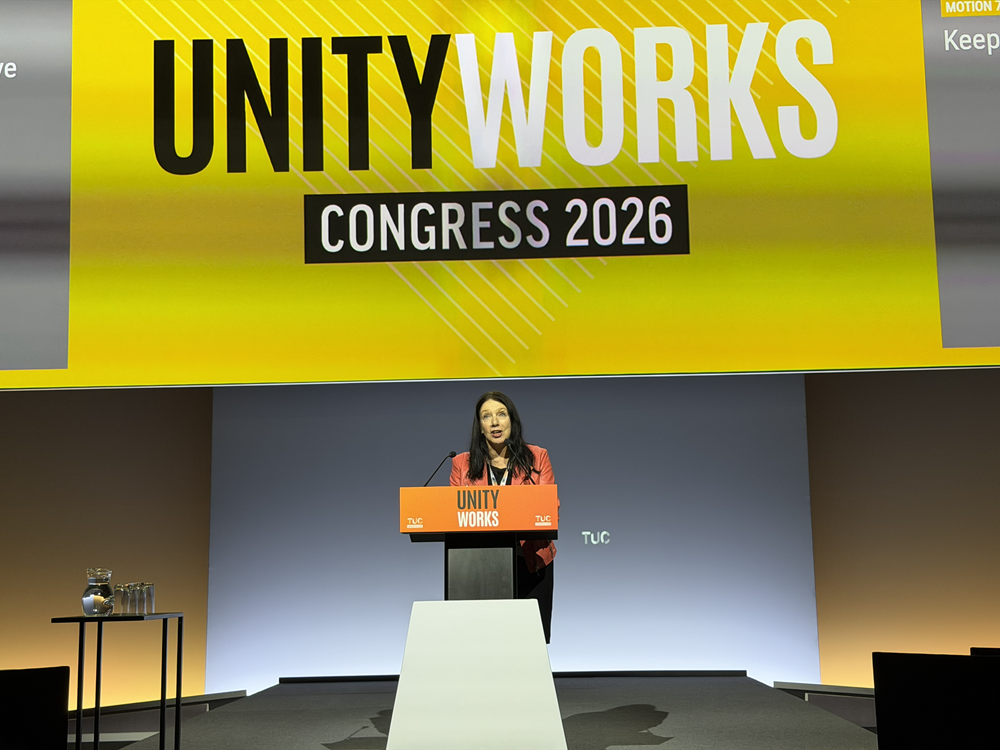
Watch Marie Kelly's speech on Instagram.
In a group debate on AI, unions representing workers across a wide range of industries spoke of the threats and risks that AI present – or in some cases simply acting as a fig leaf for outsourcing, offshoring and redundancies. C13 Artificial Intelligence at work – a just transition through worker voice for the benefit of workers and society – TUC Congress Motions
Equity Councillor Jassa Ahluwalia moved a motion calling for new personality rights to protect performers – and the wider public – from AI-generated digital replicas. By cloning a performers’ likeness or voice without payment or consent, unauthorised replicas undermine performers’ income, their personal autonomy and pose a threat to the sustainability of careers in performance.
Watch Jassa Ahluwalia's speech on Instagram.
“This motion seeks to protect the real people, the artists, the original thought and imagination that AI consumes and reassembles, because AI companies have been scraping the data of creative workers from the internet, stealing our work at an industrial scale and feeding it into their perpetually thirsty machines so that it may vomit up a glob of purported creation," said Jassa. He continued: "This motion recognises that AI is not simply a powerful tool, it is a tool of power, it is designed to extract wealth out of society and into the hands of billionaires. We must fight back we must demand the right to choose how and by whom this technology is used.”
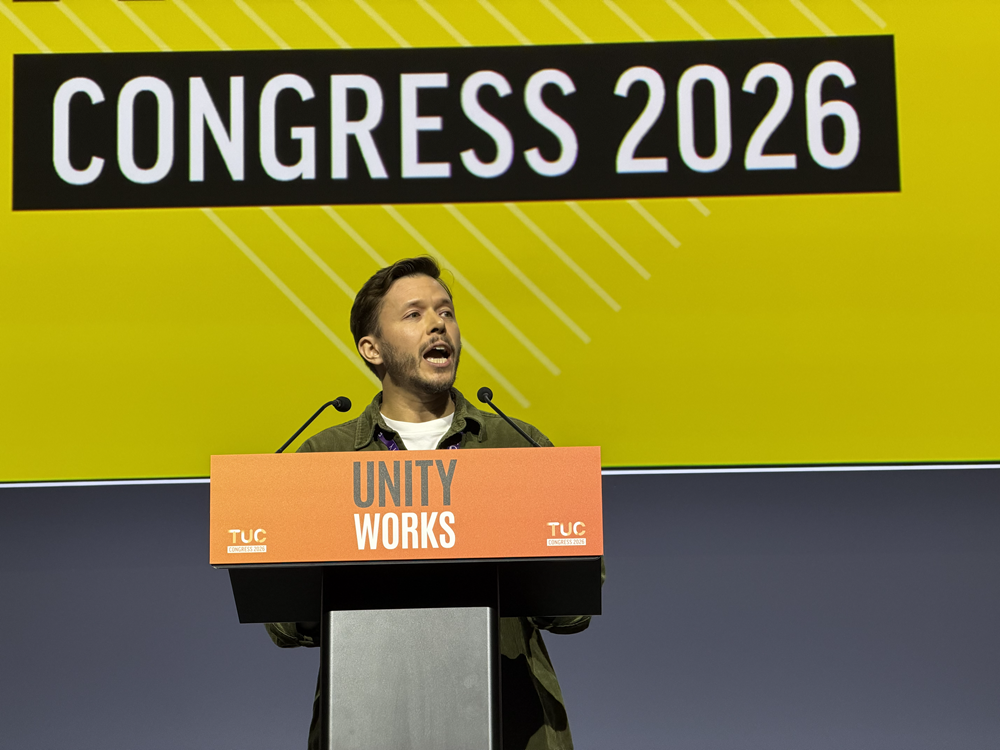
The motion, which was composited with material from the Writers' Guild and also the National Union of Journalists, was passed, securing the union movement’s commitment to “lobby the government to introduce personality rights to give performers a clear route to control and license digital replicas within agreed limits, and to give all individuals a clear right to object to a harmful digital replica.”
Jassa Ahluwalia also represented Equity at a fringe event about AI on the Monday lunchtime.
Tuesday afternoon saw First Secretary Louise Haigh MP address TUC Congress with a speech that included the need for the UK Government to “heed the warnings” about artificial intelligence while recognising its potential benefits. In response to the comments, Equity General Secretary Paul W Fleming called for urgent legal protections to ensure that AI is not deployed destructively at the expense of creative workers.
Wednesday
International solidarity
On Wednesday morning, Congress was addressed by Osnay Miguel Colina Rodriguez, general secretary of Cuba CTC trade union. Following Rodriguez's speech, Equity Councillor Sam Swann spoke in support of a motion calling for an end to the US siege of Cuba. Sam hailed the Cuban people as “some of the bravest comrades of our movement’s history, whose existence every day is a challenge to capitalism, and a challenge to imperialism, capitalism’s highest stage.”
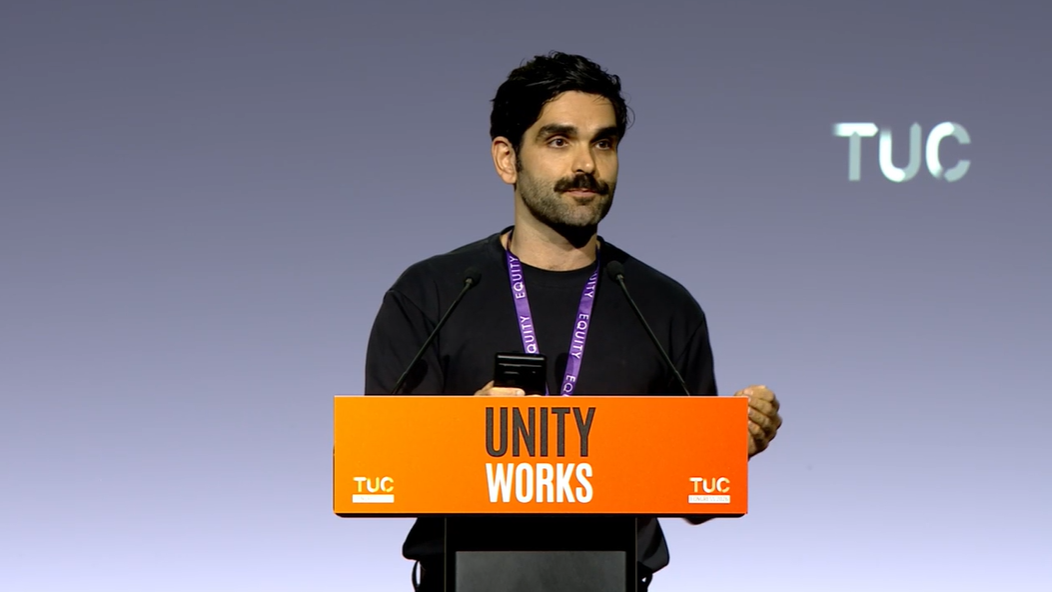
He also highlighted the impact of the US blockade on Cuban artists and performers, describing it as a “callous aggression that has caused power cuts of up to 30 hours, forcing key cultural institutions to suspend performances and nightlife, decimating the incomes of thousands of those workers”, Sam said that “despite this, Cuban workers have carried on performing-shows during daylight-hours in schools, town squares and communities.” The motion passed.
The role of trade union movement
As Congress drew to a close, Equity General Secretary Paul W Fleming seconded a motion calling for reform of the TUC, so that it can better harness the collective strength of unions, build worker power and organise more effectively across the modern economy. Speaking to the motion, which was carried, Paul said: "It is a beginning, not of talking about union business for the sake of it, but of talk of a renewal of our movement as an industrially co-ordinated force, not political lobbying, or service providers, but building the power of our class."
The motions that were passed will form the trade union movement’s agenda for the coming year.