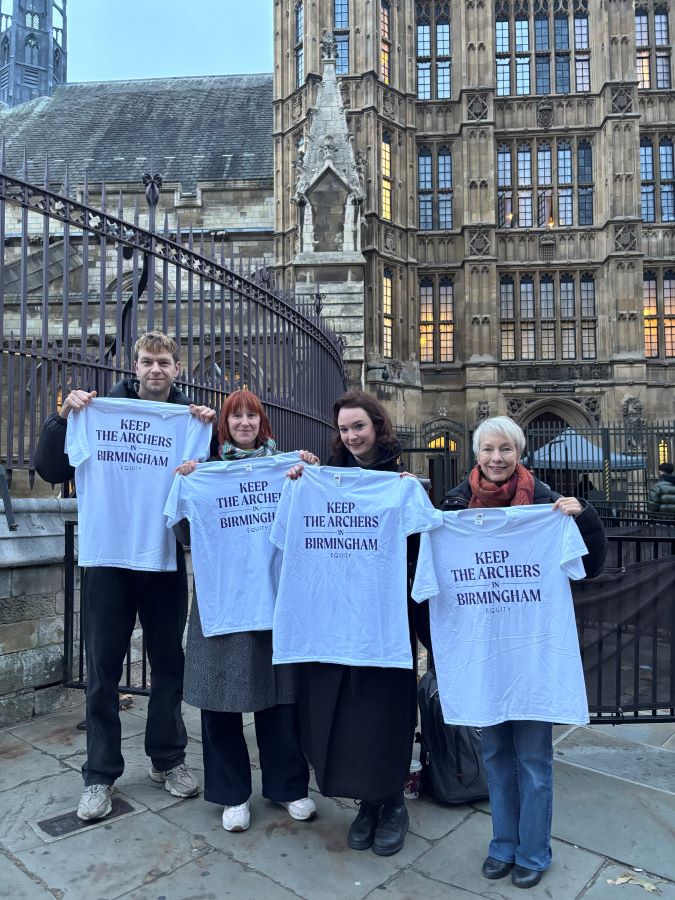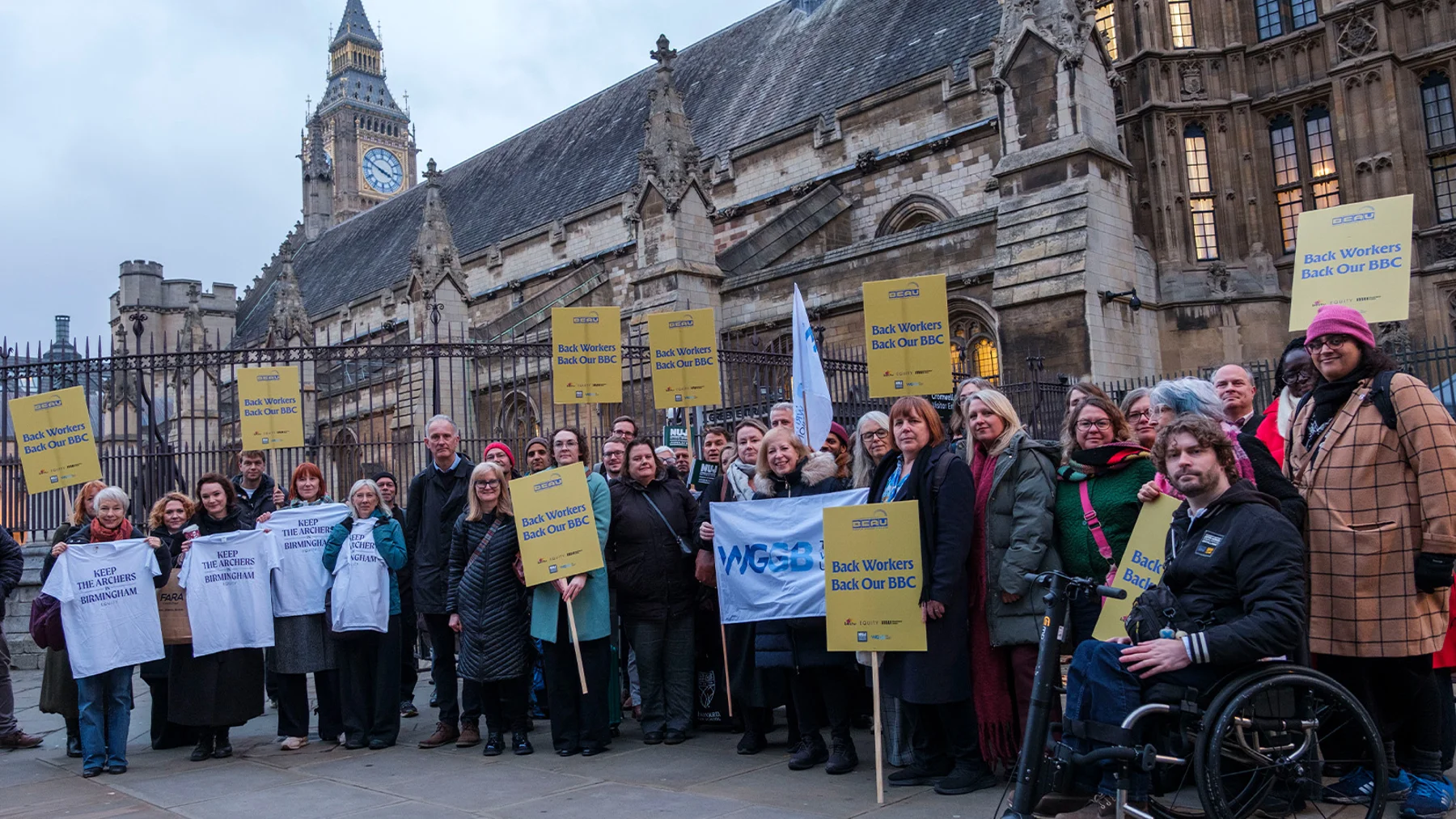
On 24 November 2026, Equity was in full force in Westminster for the parliamentary lobby to save the BBC, speaking up for the corporation’s workforce and setting out our vision for what this 100-year old institution could be.
This standing-room-only event was organised by the Broadcast, Entertainment and Arts Unions, of which Equity is a member. Dozens of members and staff from our sister unions were in attendance, along with about 20 parliamentarians – MPs as well as peers.
The event focused on celebrating what the BBC gives us and what we stand to lose through further cuts.
Speaking to the packed room, Equity General Secretary Paul Fleming described the union's vision for a revitalised BBC, explaining why the BBC is “the jewel in the crown of the UK’s creative industries”. He called for an end to the internal market and outsourcing, which deprive the BBC of owning and developing home-grown productions and talent.
Now is a crucial and precarious moment for the BBC, as the government is reviewing its Royal Charter. The Charter has a major impact on the work opportunities available to the UK’s creative workforce. We are demanding that the next Charter guarantees a stable and well-funded BBC, which puts the workforce at the heart of its decision-making.
Ever since the Charter review process kicked off in December 2025, Equity has been lobbying the government and civil servants to promote our vision for a democratised, regionalised and cooperativised BBC – a civic institution and a core element of the welfare state.
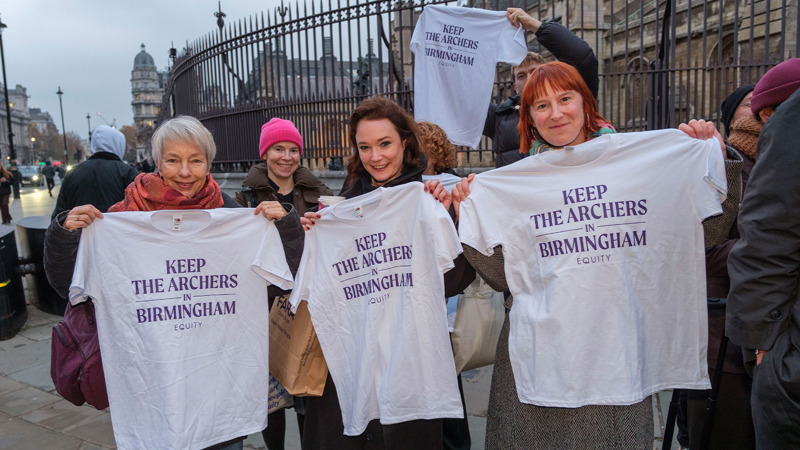
Present at the rally was a strong delegation of 11 Equity members, including several Councillors and four cast members of The Archers. Susie Ridell, who plays Tracy Horrobin in BBC Radio 4 soap The Archers, spoke about the BBC’s plans to move the show out of Birmingham for the first time in its 75-year history, which has been shocking to the show’s cast and crew. The union is supporting cast members in fighting this decision.
Equity Councillor Dan Edge spoke about the BBC being “the NHS for culture,” and criticised the outsourcing of BBC production capacity to the private sector. He also discussed the BBC’s essential role in ensuring access to the industry for deaf and disabled creative workers.
Equity member Tracey Briggs decried BBC under-investment in the Midlands, which despite being home to about a quarter of the UK’s licence-fee payers, receives only a tiny fraction of BBC funding.
Equity Councillor Jo Cameron Brown explained the fundamental importance of the BBC’s training and early career opportunities.
Together, these interventions from Equity members show why a well-funded and stable BBC, which centres the workforce in its decision-making, is so vital for Equity members’ careers, livelihoods and wellbeing.
We were encouraged by the vocal and whole-hearted support of the many parliamentarians in attendance.
The next stage in the Charter review process is a debate in Westminster Hall on 17 December, followed by the publication of the White Paper, which is likely to take place in early 2027. The next Charter will take effect on 1 January 2028.
Equity's vision for a revitalised BBC