

Devolved and local elections 2026 – Register to Vote!
Register to vote so we can put arts funding front and centre of the national agenda.
Search our data tracker to see how local government arts funding has changed in your area.
The collapse of arts funding across Britain is threatening universal access to arts and entertainment. Our new research has found local government arts funding has plummeted 55% across Britain since 2010, down from £1.19 billion to just £539 million in 2024-25.
Use our interactive arts funding tracker below to find out how much your local authority spent on arts and culture from 2010-11 to 2024-25. The tool and analysis have been produced by the Autonomy Institute.
Email or send a letter to your local council candidates to ask them to invest in the arts in your area:
*Please note, Equity is not contacting Reform candidates during this election. We advise members not to contact Reform candidates in an Equity capacity.
Write to your local candidatesThe Local Governments Arts Funding Tracker provides a comprehensive longitudinal analysis of spending on arts and culture across all of the local authorities in England, Scotland and Wales from the 2010-11 to 2024-25 financial years.
By aggregating official audited revenue outturn data specifically focusing on categories like museums, galleries and theatres, the dashboard offers a standardised view of cultural investment adjusted for inflation and structural changes to local government.
The Local Governments Arts Funding Tracker visualises local authority spending on arts and culture across 317 authorities in England, 32 in Scotland, and 22 in Wales for the financial years 2010-11 to 2024-25. All figures are presented on consistent 2025 boundaries to allow for accurate longitudinal comparison.
1. Defining Expenditure
Data is sourced from official revenue outturn returns; the audited figures submitted by councils to central government. We used net expenditure figures, defined as gross expenditure minus income (admission fees, ticket sales, and grants).
2. Sector Categorisation
Each nation defines "arts and culture" differently in its official reporting. This dashboard aggregates the following categories:
England (MHCLG RO5): Archives, Arts development and support, Heritage, Museums and galleries, and Theatres and public entertainment.
Scotland (LFR 02): Museums and galleries, and Other cultural and heritage services. (2011-12 and 2015-16 are excluded due to lack of granular data).
Wales (StatsWales): Cultural and heritage services.
3. Geographic Boundaries & Data Handling
To ensure data remains comparable despite local government reorganisations in England, the following logic was applied:
Consolidations: Between 2019 and 2023, 42 predecessor authorities were merged into 11 successors (e.g., the creation of North/West Northamptonshire and Cumberland). In these cases, historical spending from the predecessors is summed and attributed to the new successor.
Split Successors: Where a county council was abolished and replaced by multiple unitaries (Cumbria, Dorset, and Northamptonshire), historical spending is apportioned by geographic area weighting. Each successor is assigned a share of the former county's spending based on its percentage of the total land area.
4. Inflation Adjustment
Expenditure values in the dashboard were adjusted for inflation, with all real-term data indexed to 2024-25 prices. These adjustments are calculated using the ONS CPI All Items index (series D7BT). The final figures are derived by averaging monthly index values across each April-to-March fiscal year.
Register to vote so we can put arts funding front and centre of the national agenda.
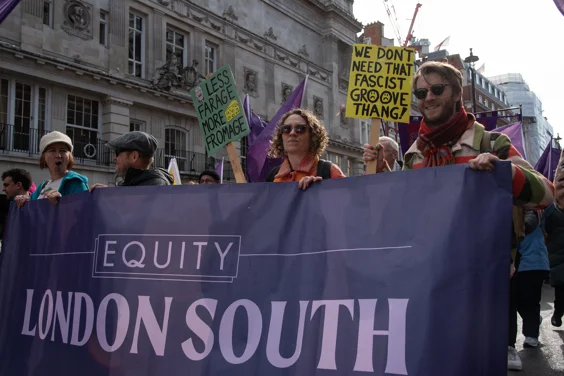
Use our template to ask candidates standing in the England council elections on 7 May to invest in the arts.
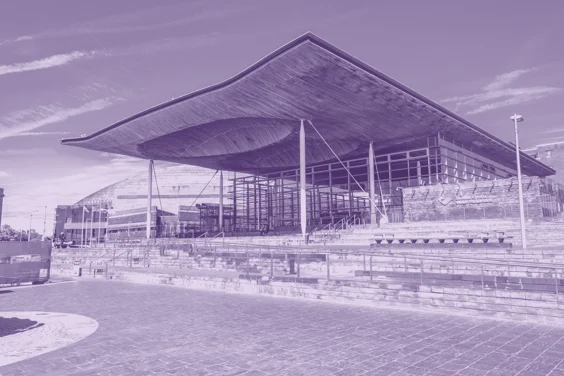
Ahead of May’s Senedd elections, we're asking candidates to back our manifesto calling for culture in Wales to be treated as essential infrastructure.
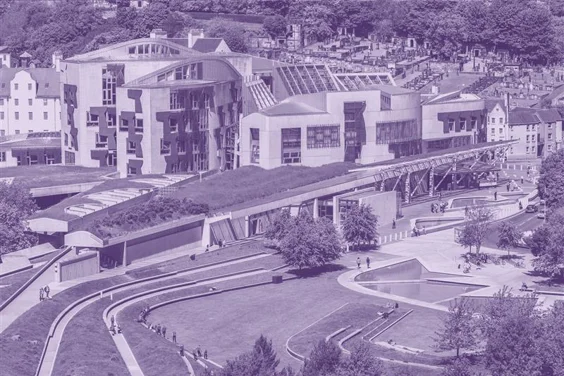
Ahead of May’s Scottish Parliament elections, Equity is calling for Holyrood to back a pilot scheme of a Scottish Basic Income for Artists (BIA).