AI ballot results: 99% YES vote
Performers willing to take action over AI
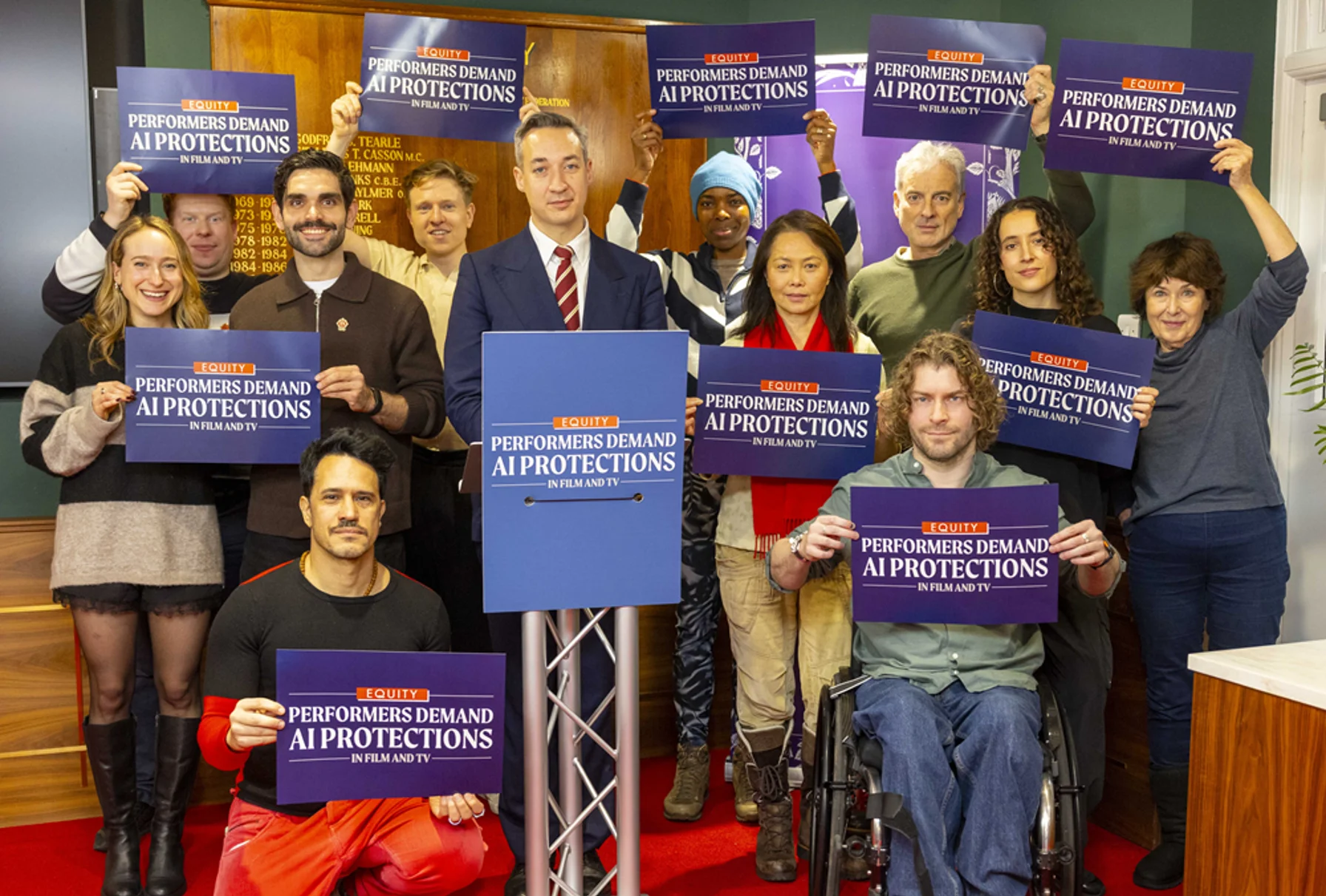
Our indicative ballot on AI protections closed on 18 December, 12 noon. Equity members working in film and TV returned a clear consensus that they are willing to take industrial action over AI, with 99.6% of respondents voting yes. This result sends a strong message from our members to film and TV bosses: we will do what it takes to secure the AI protections that we need.
The turnout of the indicative ballot – which asked the question “Are you prepared to refuse to be digitally scanned on set to secure adequate AI protections?” – was 75.1%. The ballot was open to Equity members who had worked on the Pact TV or cinema films agreement since 2021.
Those of you who voted have played an important part in building the collective strength of our union. Please remember that this was an indicative non-binding ballot. This means that you do not need to refuse to be scanned now. Rather, we are using the ballot results to show Pact that our members are prepared to take action.
However, if you are on set and a number of Equity members in the cast would like to organise to refuse scanning, we can support you to do this. Contact productions@equity.org.uk and we can advise.
Next steps
-
We have written to Pact with the results and demanded they come back to the table with a better deal on AI.
-
If they still refuse to agree to give us the protections we’re seeking, we will move to a statutory postal ballot on taking industrial action short of a strike (refusing to be scanned on set). A statutory ballot would only apply to those working currently, and we will begin in earnest identifying productions where industrial action may happen in the early part of 2026. We will keep you updated on progress and communicate this to you before any ballot happens.
Artificial intelligence is a generation-defining challenge. And for the first time in a generation, Equity's film and TV members have shown that they are willing to take industrial action...PACT and allied producers can turn this around. The ball is in their court when we return to the table in January.
Paul W Fleming, Equity General Secretary
Who could vote in the ballot?
Around 7,000 Equity members who have worked on a Pact-Equity agreement since they were last negotiated in 2021 were eligible to vote in the ballot. It’s the first time this whole group of members working across film and TV have voted on industrial action, showing the far-reaching impact of AI on performers across the industry.
What is an indicative ballot?
An indicative ballot is a non-binding vote which shows the strength of feeling over an issue. You do not need to refuse to be scanned right now. The question was about whether you would be prepared to take industrial action in the future. If we move to industrial action as a next step, we would send a secondary statutory ballot to all eligible members.
Background to Pact negotiations
Equity is currently in negotiations with the Producers Alliance for Cinema and Television (Pact) – the trade body for independent production and distribution companies. We are trying to determine a new agreement to set minimum pay, terms and conditions for actors, dancers and stunt performers working in film and TV.
Alongside issues such as pay, secondary payments, self-tapes and hair and make up provisions for the global majority, artificial intelligence is a key issue for Equity members.
Members are increasingly concerned about the use of their voice and likeness, including being digitally scanned on set. Equity is fighting for protections for performers based on the principles of explicit consent, transparency of terms, and fair remuneration for usage.
So far, Equity and Pact have made significant progress in negotiations on protecting performers’ rights when it comes to working with digital replicas (digital copies of real performers). However, we are fighting for stronger protections in relation to the use of synthetic performers (artificially generated performers). This is crucial to defend jobs and aspirations in film and TV.
However, a major section of Equity's claim remains unaddressed regarding the use of data, such as recorded performances or digital scans, to train AI systems. This is about future proofing our collective agreements and protecting your personal data.
Equity is arguing that producers, content owners or any third party should not be using performers' data for this purpose without informed consent.
But Pact has not responded with adequate contractual assurances on this matter.
FAQs
Pact is the UK screen sector trade body for independent production and distribution companies. It stands for the Producers’ Alliance for Cinema and Television.
AI training is the process of creating, developing, adapting or improving AI models. Training data is the information used to teach an AI model how to make predictions, recognize patterns or generate content.
Performers currently do not have transparency from film and television bosses (and the wider AI industry) regarding the use of their performances or biometric data for AI training purposes. We understand that some of the film and television engagers have already developed their own AI models using training datasets that include content featuring performers’ contributions without their informed and explicit consent and without compensation. We believe there should be provisions in our collective agreement that cater for this type of use by producers and engagers.
It is common for performers to have their image, voice and/or likeness digitally captured on set. This process enables production companies to create realistic characters and digital assets that can be used in films and television programmes.
Digital scanning technology of any kind should only be used specifically within the context of specified production. However, members who are being scanned on set do not have transparency around how their personal data is being recorded, stored and processed within the context of the production and beyond. With the development of generative AI, the scope of what VFX can achieve and the displacement effects on performers have exponentially increased.
An indicative ballot is a non-binding vote which shows the strength of feeling over an issue. It indicates members’ support for taking action and can be a crucial lever in negotiations. Getting a strong yes vote in an indicative ballot means it’s likely that a real industrial action ballot will also receive a big yes vote. You can’t take industrial action on the back of an indicative ballot – a separate statutory ballot is required and this would then cover members legally to take industrial action.
Industrial action short of a strike is essentially anything other than stoppages. It could be an overtime ban, work to rule, refusing discreet activities, slowdown (reduced productivity), or wearing campaign t-shirts.
Only current Equity members could vote in this ballot and any future ballots we have, including on the final deal. If you are not an Equity member, we encourage you to join today.
Your ability to win these changes comes from your collective strength. The more members there are, the harder it is for PACT to deny you the changes you need.
The ballot was open to Equity members who have worked on the Pact-Equity Cinema Films Agreement and TV Agreements since it was last negotiated in 2021.
The ballot has to be representative of the current workforce in Film & TV to ensure that any action that follows is enforceable and complies with Trade Union legislation.
Only those who have worked on the Pact-Equity Cinema Films Agreement and TV Agreements since 2021 could participate in the ballot, which means that supporting artists were not eligible. The concerns around AI and digital scanning are extremely relevant to our supporting artist members. We are seeking similar AI protections, which will be negotiated in 2026 alongside other improvements to the Pact-Equity Supporting Artists Agreement.