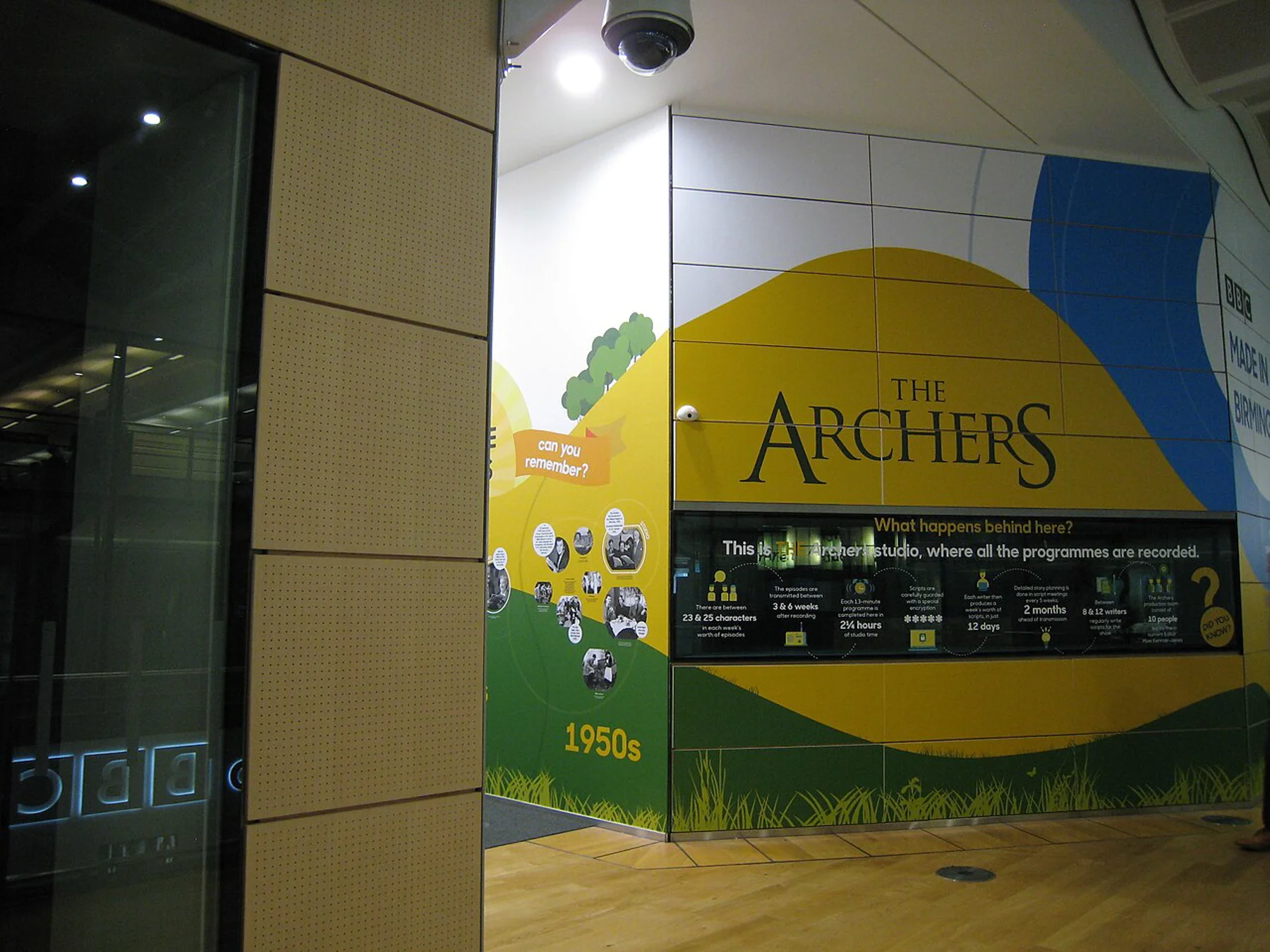
The cast of The Archers, along with scriptwriters and freelance directors and sound team, have written to BBC Director General Matt Brittin calling on him to commit to keeping the recording of the iconic radio drama in Birmingham.
In the letter, which is available in full below and signed by more than 100 current and previous cast members, including Dame Judi Dench, the cast say that “The Archers leaving the Midlands is akin to Corrie leaving the north-west, or EastEnders leaving the south-east” warning that abandoning the West Midlands “risks ripping out the heart of Ambridge”. They go on to caution: “Removing the recording of The Archers from the Midlands and divorcing the production team from the cast will have a tangible impact on the quality of the programme and represents an existential threat to its future.”
In the letter, which is also signed by current and former editors, scriptwriters, sound effects team, programme advisors and trade unions Equity and WGGB, they highlight the history and heritage of the show, which is set in the West Midlands and has always been recorded and produced there. The importance of local employment and the fact that many local actors receive their first professional credits working on the show, are also raised.
The letter touches on the success and importance of the show to the BBC, beloved by millions of listeners. The cast say: “A flagship show deserves flagship facilities, from which both the BBC and the city of Birmingham would benefit for decades.” They sign off saying they “stand in solidarity with our colleagues and the region, and to safeguard this beloved programme for generations of listeners and artists to come.”
Full text of the letter:
Friday 16th October 2026
Dear Director General,
BBC’s proposal to scrap audio drama studio in the Tea Factory
We are writing as the cast, scriptwriters, freelance directors and sound team of The Archers to express our deep concern at the BBC’s recent announcement reversing its commitment to include an audio drama studio in the Tea Factory, its new base in the West Midlands, rendering the programme homeless when the lease ends on our current studio in the Mailbox.
This decision is a shocking about-turn from previously stated commitments to invest in the area, and represents an economic and cultural abandonment of the Midlands, which contributes more to the licence fee than any other region in return for the smallest relative spend. The presence of the Tea Factory in Digbeth, equipped with a fully-fledged studio, should herald an exciting new chapter in the proud industrial heritage of the city of Birmingham. Instead it risks standing as an empty promise.
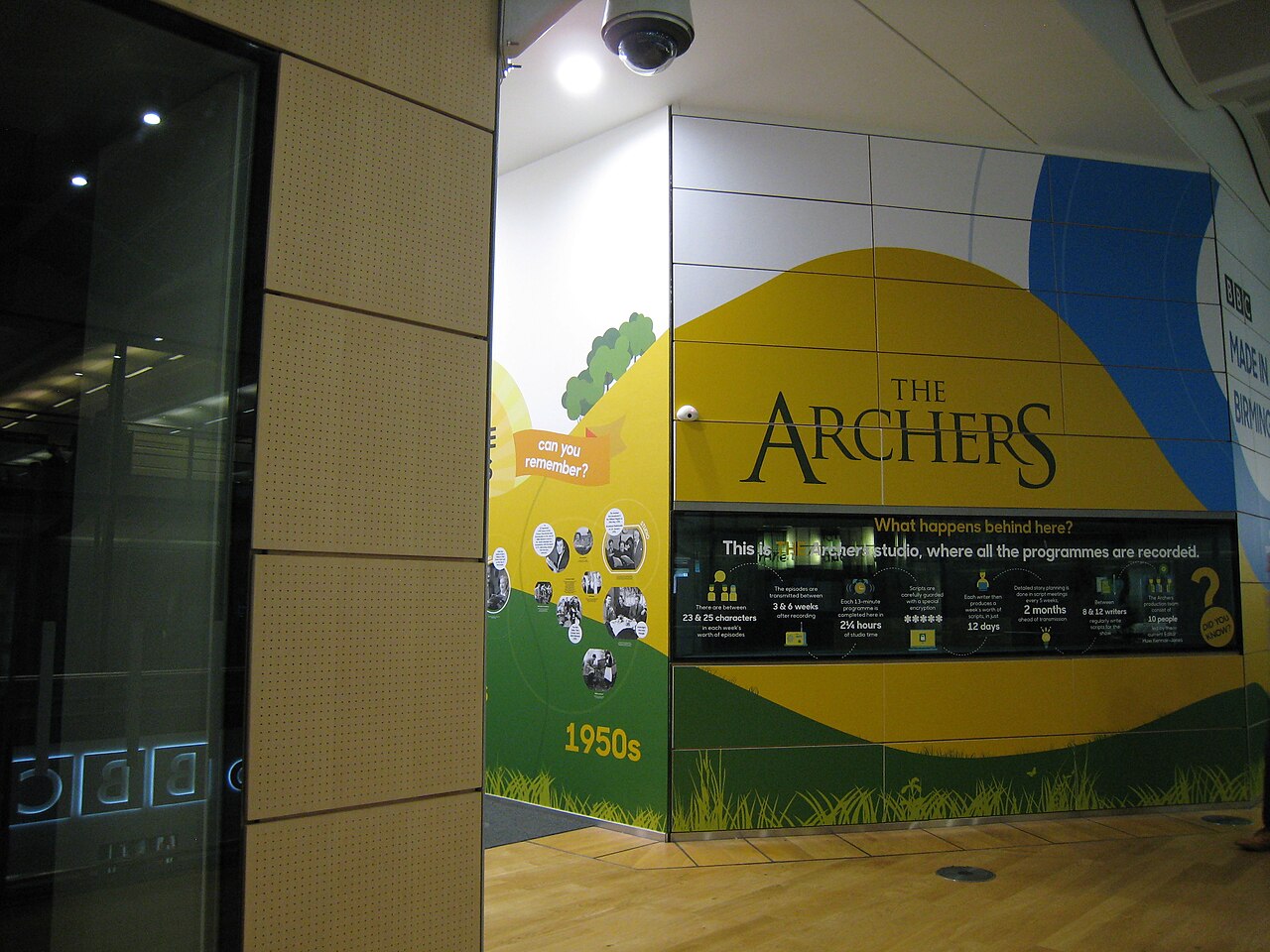
Recording the programme elsewhere, particularly in London, flies in the face of the BBC’s much-touted mission to be “Across the UK” and directly contradicts the government policies of Cultural and Creative Regeneration and the Prime Minister’s commitment to deliver “good growth in every postcode”. We believe it’s a great betrayal of the people of Birmingham, its creative industries and its local businesses, all of whom benefit from The Archers’ presence in the city. It would also bring to an end a 75 year relationship between programme and place. The Archers has been made in Birmingham ever since its conception in 1950 and national roll-out in 1951. The show is set in the West Midlands, it’s where all of its characters live and love and farm the land, it’s where the listeners go in their minds when they hear the famous theme tune, so it’s only right that The Archers continues to be recorded there. The Archers leaving the Midlands is akin to Corrie leaving the north-west, or EastEnders the south-east. It is born of the very fabric of the place, and deserves to stay at home. It risks ripping out the heart of Ambridge.
Many local actors receive their first professional credits working on the show, either as day-players or in regular roles, and it is a vital source of employment for Midlands-based writers, directors and technicians too. There is already a grave dearth of creative and technical jobs in the Arts outside of London. People are being trained in these vocations across Birmingham’s many excellent universities, colleges, and conservatoires, as you mentioned in your recent interview with Midlands Today. But the removal of professional opportunities like The Archers will force them to leave the area in pursuit of work almost as soon as they graduate, marking another great loss to the city. This would be a particularly wounding blow in the wake of the cancellation of Doctors in 2024, a programme which provided jobs for local freelance actors, writers and crew and was another route into the industry for those at the start of their careers. This cancellation is part of a wider decimation of scripted output in the city which must be reversed.
Removing the recording of The Archers from the Midlands and divorcing the production team from the cast will have a tangible impact on the quality of the programme and represents an existential threat to its future. As far as we’re aware, this kind of separation has never happened previously with a continuing drama and for good reason. When Radio 4’s daily WW1 serial Home Front was first established it was recorded in Birmingham but managed from London. However, the situation was quickly deemed untenable and the teams reunited. The Archers is made in the same way, with the same relentless schedule, and so demands the same proximity. The cast and production team benefit hugely from a close working relationship during recording blocks; our separation would greatly inhibit our ability to be reactive to last minute changes common for a daily soap; unforeseen crises (including cast and crew welfare) can be navigated dexterously with everyone working together as a well-oiled unit, allowing us to be as fleet of foot as we need to be in order to keep the programme on time and the standard as high as possible. This is essential to the smooth running of any show, let alone one which is broadcast 6 days a week, 52 weeks a year, 75 years and counting. We are able to make the programme as quickly and reliably as we do because of a fantastic synergy between cast and crew, an exchange of ideas that can happen on the fly and under pressure, based on years of working so closely together and with facilities that meet the exact and unique demands of the show. This risks being fatally compromised.
The idea that The Archers will still be ‘made’ in Birmingham if it is not recorded there is preposterous and insulting, to the listeners and the creatives, as if the actors, directors and sound team are not as integral a part of the programme as our colleagues in production; we are the people who bring these characters to life, who shape and grow with them over many decades alongside generations of listeners. We ought to stand where our characters stand, following in the footsteps of our predecessors in the programme and our ancestors in the village: firmly on Midlands ground.
Finally there is the issue of cost, both financial and human. You cite the need to save money as the primary driver of this decision, and while we understand the huge pressures that the BBC is under, we think this decision is terribly short-sighted. The Archers has very specific studio needs in terms of both its set and its acoustic spaces. In our experience as freelancers working across the UK in various BBC and private recording studios, the only existing BBC facility that could realistically accommodate some of these needs is in London’s Broadcasting House, and even then with greatly damaging trade-offs for purse and product. On a purely financial level, this would involve either temporarily relocating a large number of the existing Birmingham-based technical and production team at great expense each month, or hiring and training a new London-based team who will not be fluent in the idiosyncrasies of the show, also at great expense. The cost of transporting and housing a Midlands-based team elsewhere in the UK for a quarter of the year would dwarf any short term savings made through the cancellation of the new studio within just a few years. It’s real short-termism, and doesn’t represent value for money for the licence fee payer anywhere, let alone in Birmingham. Alongside this, it would come at great cost to the team, who would have to construct and deconstruct The Archers set each time, placing a huge burden on them professionally and risking a tangible compromise in quality for the listener and/or delays in transmission.
There are plentiful opportunities for the BBC to pursue creative partnerships across both the commercial and education sectors in order to capitalise on the asset of a new Birmingham studio for the periods of time it is not being used to record The Archers. It could be a tourist attraction. It could be a training facility for the next generation of radio actors, writers and technicians. It ought to be both, and much more besides. New audio production is experiencing an enormous boom with the rise in popularity of podcasting and audio drama on multiple platforms, particularly among young people. The next generation of Archers fans and Archers workers stands ready. But, as one of our scriptwriters, Katie Hims, pointed out in her piece for The Observer last year, the BBC has been systematically dismantling its radio drama infrastructure when it should be capitalising on this surge in interest. Instead, Katie wrote, it is ‘snatching defeat from the jaws of victory’. We believe the decision regarding the Tea Factory studio is another missed opportunity which the BBC will live to regret. Rather than investing in its own long-term infrastructure and the wider cultural health of the region, the BBC will instead be spending licence fee payer’s money bolstering the profits of London hoteliers, or renting a private recording studio elsewhere in the UK which would still not have the facilities required to make this brilliantly singular drama. We believe the decision is senseless and myopic. Not only will the quality of the programme and therefore the listener experience suffer, but so too will the BBC’s finances - exactly what this move is purporting to protect.
The Archers is currently travelling the country on a live tour, The Archers: Live at 75, to mark the programme’s 75th birthday. A central pillar of the live show is a celebration of the show’s history, including where and how it is made - in the Midlands, and using live spot effects (foley) with an attention to detail, craft and care that gives it the prestige its earned as the world’s longest-running continuing drama, beloved by millions of listeners of all ages, not just in the UK but around the globe, consistently topping the BBC Sounds on-demand lists, and celebrated by the BBC as a flagship programme and a jewel in the crown of British broadcasting. It is part of our national identity. Radio already represents an extraordinary return on investment for the BBC. A flagship show deserves flagship facilities, from which both the BBC and the city of Birmingham would benefit for decades. The new set for EastEnders cost the BBC £87 million. The approximate cost of a new studio for The Archers (£1.2-1.5 million) pales in comparison, despite the programmes’ broadly comparable audiences. This equates to a one-off payment of just 30p per regular listener, of which we routinely have 5 million, or 6.4p per licence fee payer. Without a dedicated facility, more sound would have to be added in post-production, threatening the livelihoods of our colleagues in studio and also the listener experience. These are not simply effects, they are a key part of the performance and the building of the world. Ambridge exists only in the imaginations of our audience, and this move threatens to shatter those pictures, painted through diligent craftsmanship across three-quarters of a century.
We strongly urge you to recommit to the studio in the Tea Factory, for which extensive planning and design work has already been completed. To cancel the plans would be a dereliction of duty to the region and to listeners, and an abandonment of long-held commitments as our National broadcaster. The Tea Factory risks standing as a monument to the BBC’s loss of nerve and conviction, and a catastrophic waste of money and potential. Local people, licence fee payers, BBC staff, freelancers and listeners all deserve better. The General Secretary of Equity, a proud Brummie himself, was clear and emphatic in his opposition to this plan. The cast are grateful to have the weight of our union behind us, and reiterate that no industrial tool is off the table. The WGGB has also made a statement insisting that the recording of The Archers must stay in Birmingham.
Many of the cast and crew are Midlanders, having either been born and raised there, trained there, or as current residents. And those of us who aren’t have become adopted Midlanders through our association with The Archers. We love working in Birmingham, and are proud to be custodians of this magnificent programme, which belongs to everyone, and has its roots deep in Midlands soil. It should stay, and thrive, where it belongs. This letter is not a group of spoiled creatives averse to change or demanding the shiniest new things, it’s a determination to stand in solidarity with our colleagues and the region, and to safeguard this beloved programme for generations of listeners and artists to come.
We implore you to reconsider and look forward to your response.
Signed,
Ben Norris (Ben Archer)
Emerald O’Hanrahan (Emma Grundy)
Carole Boyd (Lynda Snell)
Richard Attlee (Kenton Archer)
Pat Gallimore (Pat Archer)
Hollie Chapman (Alice Carter)
Helen Longworth (Hannah Riley)
Arthur Hughes (Ruairi Donovan)
Heather Bell (Clarrie Grundy)
Susie Riddell (Tracy Horrobin)
Sunny Ormonde (Lillian Bellamy)
Angus Imrie (Josh Archer)
Charlotte Martin (Susan Carter)
David Troughton (Tony Archer)
William Troughton (Tom Archer)
Tony Turner (Vince Casey)
Michael Lumsden (Alistair Lloyd)
Isobel Middleton (Anna Tregorran)
Paul Copley (Leonard Berry)
Felicity Finch (Ruth Archer)
Louiza Patikas (Helen Archer)
Joanna van Kampen (Fallon Rogers)
Ryan Kelly (Jazzer McCreary)
Lucy Speed (Stella Pryor)
Daisy Badger (Pip Archer)
Annabelle Dowler (Kirsty Miller)
Jackie Lye (Joy Horville)
Wilf Scolding (Chris Carter)
Trevor Harrison (Eddie Grundy)
Souad Faress (Usha Franks)
John Telfer (Alan Franks)
Madeleine Leslay (Chelsea Horrobin)
Ellie Pawsey (Esme Mulligan)
Buffy Davis (Jolene Archer)
Nick Barber (Rex Fairbrother)
Rosie Stancliffe (Rochelle Horville)
Charles Collingwood (Brian Aldridge)
Barry Farrimond (Ed Grundy)
Hedli Niklaus (Kathy Perks)
Timothy Watson (Rob Titchener)
Simon Williams (Justin Elliott)
Perdita Avery (Kate Madikane)
Katie Redford (Lily Pargetter)
Tim Bentinck (David Archer)
Gareth Pierce (Gavin Moss)
Andy Hockley (Philip Moss)
Toby Laurence (Freddie Pargetter)
Taylor Uttley (Brad Horrobin)
Brian Hewlett (Neil Carter)
Andrew Wincott (Adam Macy)
Stephen Kennedy (Ian Craig)
Alison Dowling (Elizabeth Pargetter)
Kim Durham (Matt Crawford)
Yasmin Wilde (Azra Malik)
Angus Stobie (George Grundy)
Annie Rowe, on behalf of John Rowe (Jim Lloyd)
Mimi Bolgar Benzie, on behalf of Angela Piper (Jennifer Aldridge)
Mollie Kruczek (Keira Grundy)
Asif Khan (Akram Malik)
Olivia Bernstone (Amber Gordon)
Carl Prekopp (Tim Oatey and director)
Paul Venables (Jakob Hakansson)
Priyasasha Kumari (Zainab Malik)
Krish Bassi (Khalil Malik)
Terry Molloy (Mike Tucker)
James Cartwright (Harrison Burns)
Clare Corbett (PC Nicola Trueman)
Ryan Early (Lee Bryce)
Martin Barrass (Mick Fadmoor)
Rina Mahoney (Jess Titchener)
Paul Greenwood (Kevin Townsend)
Lucy Fleming (Miranda Elliott)
Hugh Dennis (Father Crispin)
Claire Skinner (Sally Griffiths)
Jane Slavin (DC Tanners)
Molly Pipe (Mia Grundy)
Mali Harries (Natasha Archer)
Michael Cochrane (Oliver Sterling)
Rebecca Fuller (Beth Casey)
Becky Wright (Nic Grundy)
Roger May (James Bellamy)
Joanna Brookes (Anthea Jennings)
Jasmine Hyde (Leonie Snell)
Dan Hagley (Darrell Makepeace)
Amy Shindler (Brenda Tucker)
Annette Badland (Hazel Woolley)
Lex Shrapnel (Dominic Farrell)
Mark Bonnar (Finlay)
Lisa Bowerman (Julianne Wright)
Dame Judi Dench (Pru Forrest)
Adjoa Andoh (Fiona Lloyd)
Lucy Davis (former Hayley Jordan/Tucker)
Felicity Jones (former Emma Grundy)
Kellie Bright (former Kate Aldridge)
Charlotte Jordan (former Amber Gordon)
Tom Graham (former Tom Archer)
Ali Belbin (Saskia and other roles)
Bella Hamblin (Tina and other roles)
Bharti Patel (Inspector Geraldine Norris)
Sean Connolly (Keith Horrobin and other roles)
Janice Connolly (Prison Officer)
Laurence Saunders (Den Sullivan)
Malcolm McKee (Graham Ryder)
Lorna Laidlaw (Jamila)
Ellie Darvill (Philomena Woodruff and Nora)
Michael Fenton Stevens (Paul)
James Bartlett (Carl)
Greg Hobbs (Markie and other roles)
Tina Gray (Diane and Eileen)
Ian Brooker (Wayne Foley)
Mark Carey (Ray)
Dru Stephenson (Sonya)
Tim Stimpson (scriptwriter)
Sarah Hehir (scriptwriter)
Liz John (scriptwriter)
Katie Hims (scriptwriter)
Oliver Turner (scriptwriter)
Keri Davies (scriptwriter)
Sarah McDonald Hughes (scriptwriter)
Shaun McKenna (scriptwriter)
Jessica Mitic (scriptwriter)
Peter Leslie Wild (director)
Marina Caldarone (director)
Julie Beckett (director)
Rosemary Watts (director)
Sally Avens (director)
Vanessa Nuttall (spot effects artist)
Andy Partington (sound engineer)
Niall Gault (sound engineer)
Iain Hunter (sound engineer)
Fiona Vooght (sound engineer)
Martha Littlehailes (sound engineer)
Andrew Smith (digital producer)
Sybil Ruscoe (farming and countryside advisor)
Fiona Mountain (farming and countryside advisor)
Vanessa Whitburn (former editor)
Kate Oates (former producer)
Helen Aitken (former producer)
Jenny Stephens (former producer)
Sue Wilson (former director)
Josefa MacKinnon (former production coordinator)
Sally Lloyd (former production coordinator)
Leanne Allen (former production coordinator)
Helen Chetwyn (former broadcast assistant)
Camilla Fisher (former archivist)
Paul Fleming (Equity General Secretary)
Leonor Lemee (Chair of Equity Audio Committee)
David Broster (WGGB West Midlands Regional Representative)