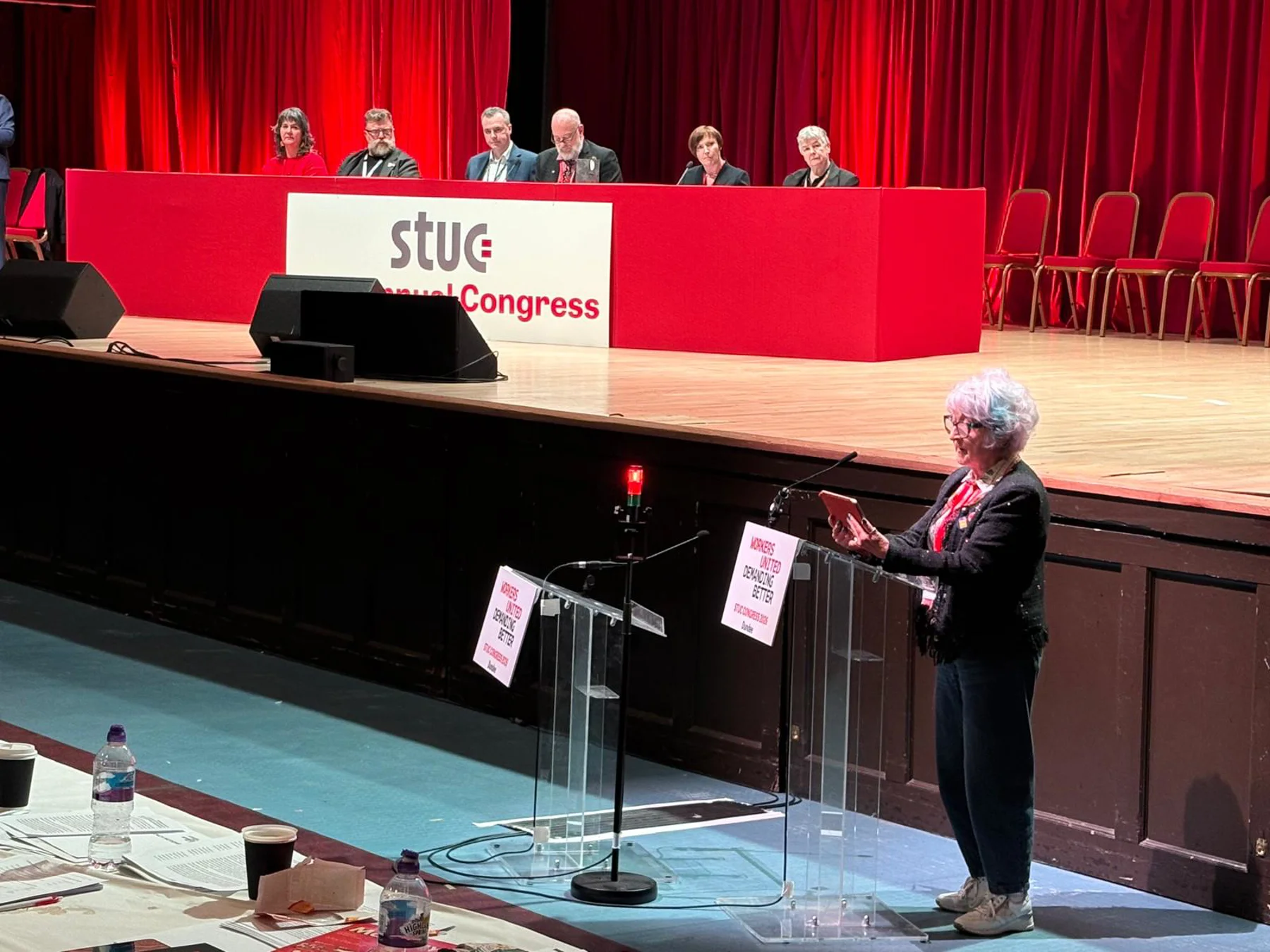
Scottish trade unions have this week voted to support Equity’s campaign on Artificial Intelligence (AI) protections, as well as confirming their support for the extension of core employment rights to freelancers.
The vote took place at the STUC Congress, the annual conference of Scottish trade unions that sets the priorities of the movement for the year ahead. This year’s Congress took place in Dundee on 20-22 April and was attended by an Equity delegation of five members and staff.
Seizing the opportunity for some direct lobbying at the top of Holyrood, Equity Scotland Official Marlene Curran spoke with First Minister John Swinney after he had addressed STUC on Tuesday. The FM said he is keen to continue the conversation about a Basic Income for Artists pilot if re-elected and committed to having Equity at the table for the design and rollout of such a pilot.
AI protections for the workforce
Equity’s Scotland Councillor Jo Cameron-Brown spoke in support of a composite motion on AI and workplace protections, which highlighted the profound impact of AI on the world of work across the spectrum, from healthcare to telecoms to the arts. Jo highlighted the example of Equity member, Gayanne Potter, whose voice was cloned to create ScotRail's announcement system without her informed permission.
Moved by the Public and Commercial Services Union, the motion called for action to protect the workforce, demanding that “AI which does not improve the lives and long-term prospects of workers should be opposed”. The motion passed and congress agreed to Equity’s specific calls to:
-
give full support to Equity’s campaign to secure AI protections for performers in its collective agreements;
-
lobby the Scottish Government and MSPs to endorse Equity’s calls for the UK Government to introduce personality rights, through which artists could better protect and licence their voice, likeness, and other aspects of their personal image;
-
campaign against the UK Government’s intended introduction of a ‘text and data mining exception’ to copyright protection;
Fair Work for freelancers
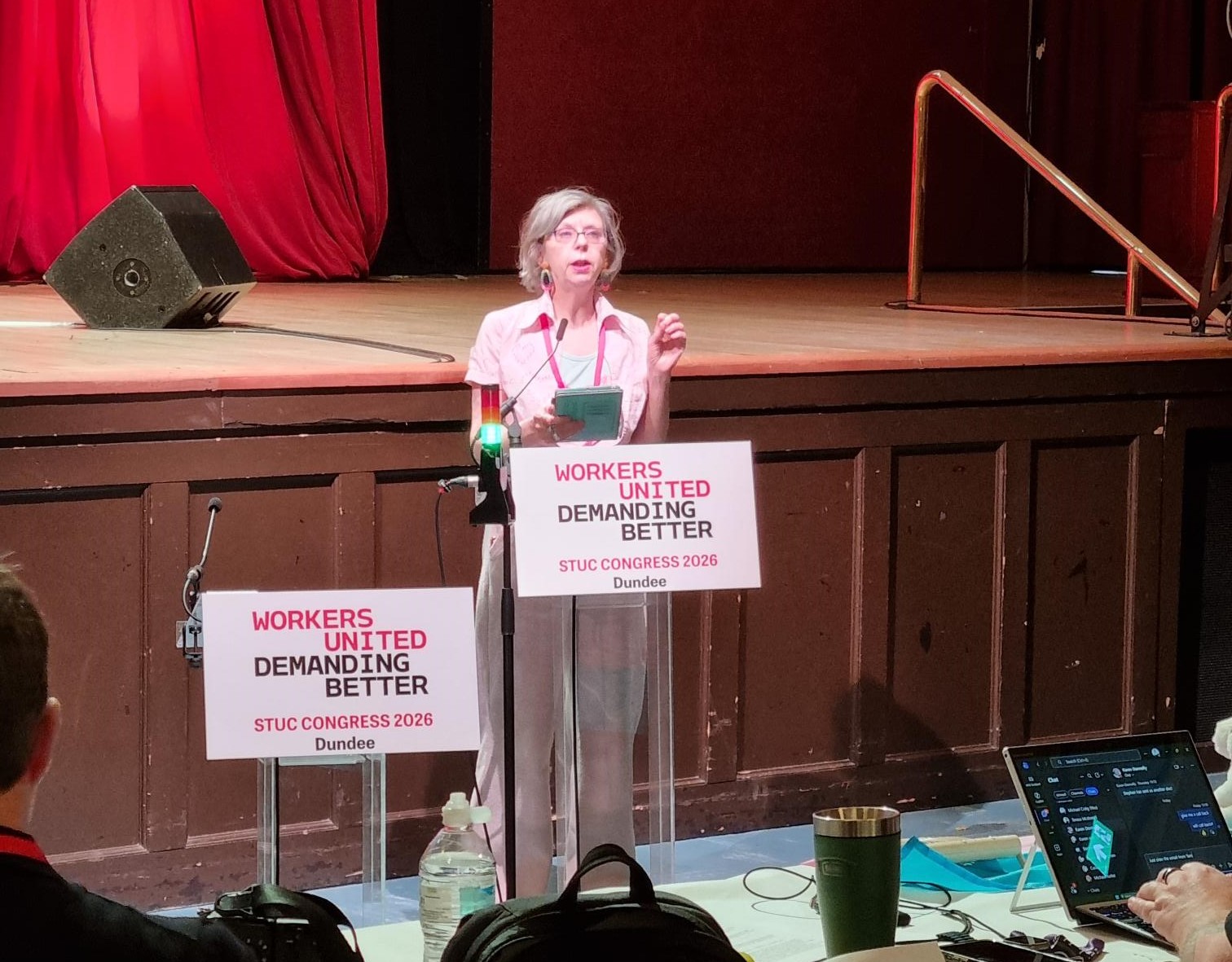
Kirsty Miller, of Equity’s Scottish National Committee, spoke in support of a motion calling for the introduction of core employment rights and fairer treatment for freelancers. Recent research with over 800 creative workers in Scotland found that 69% have experienced late payment and 33% of have not been paid at all for freelance work undertaken.
The motion, which was moved by Prospect, called for the STUC to campaign on the vital issues affecting freelance and self-employed workers, press the Scottish Government to ensure such practices are not tolerated in publicly funded organisations and projects and demand enforceable standards on payment, contracts and access to portable benefits, including sick pay, parental leave and pensions.The motion passed.
The full motion can be found at: Composite N (covering Motions 54, 56, 72 & 73) | Live Decisions of Congress 2026 | STUC
The motions that passed will now form the Scottish trade union movement’s priorities for the year ahead.