Artificial Intelligence and flexible working were among the industrial issues on the agenda at the TUC Women’s Conference last week, alongside tackling sexual harassment in the arts and addressing inequalities in the creative industries particularly affecting freelance women.
The annual TUC Women’s Conference, which this year was held at Bournemouth International Centre from 4-6 March 2026, brings together trade unionists from across the movement to set the TUC Women’s Committee’s agenda for the coming year.
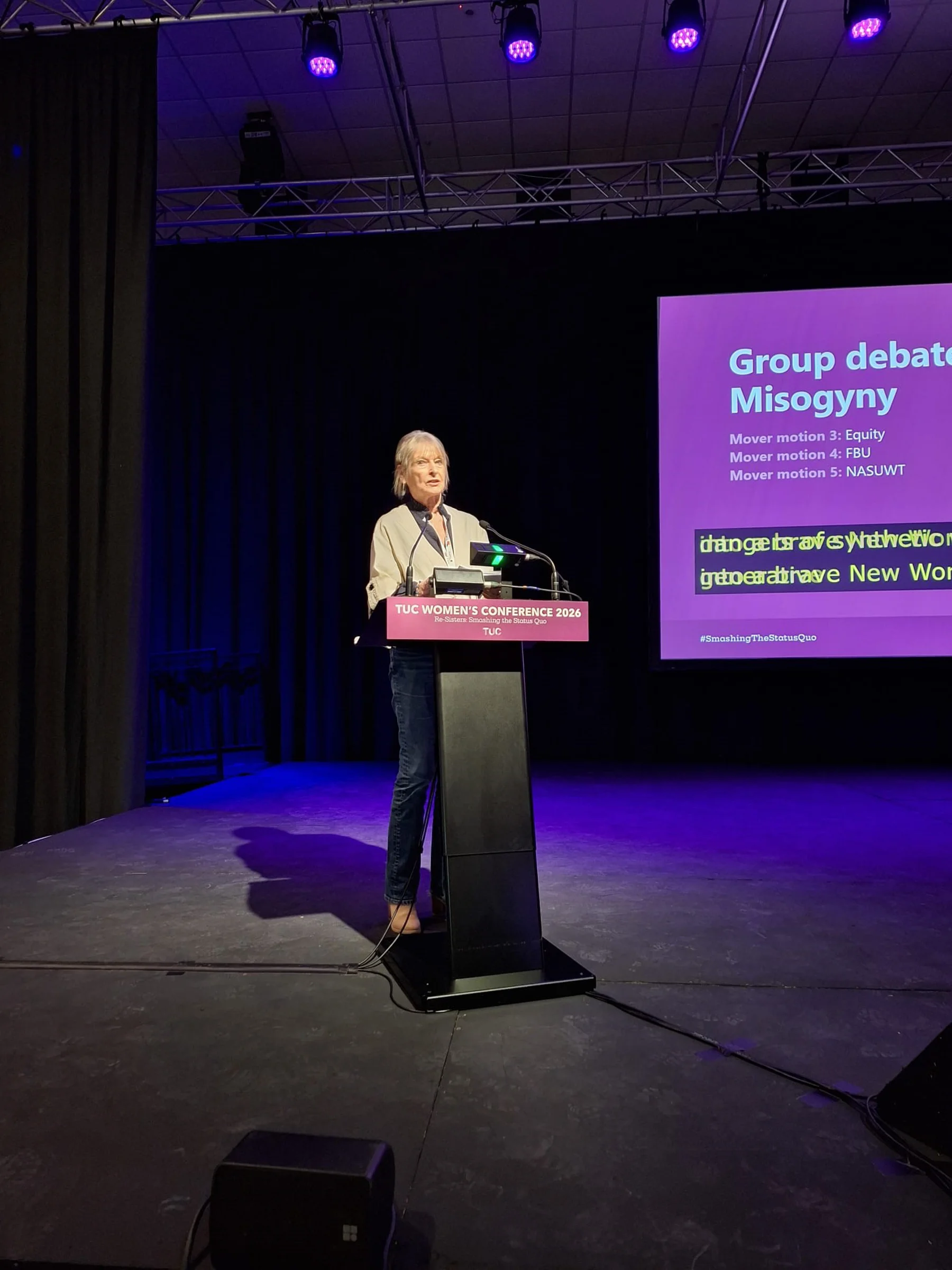
Equity moved a motion, which was passed, that called for regulation of synthetic performers. Jean Rogers from Equity’s Women’s Committee spoke to the motion, which highlighted the dangers of AI-generated actors in reinforcing existing inequalities as “women can be replaced with a product that never complains, ages, resists, or asks for safety and fair pay”. AI protections for performers, including regulating the use of generative AI in production, is one of the core demands of our current negotiations on film and TV agreements with PACT.
On day two of the conference, Equity seconded a motion that called for the Government to make flexible working the default. A composite of motions from Unison and Equity, it noted that “women continue to face disproportionate challenges in balancing work and caring responsibilities, particularly in sectors with rigid working patterns” and called on the TUC to lobby the government to “back flexible working with a gender equality focus”.
The day also saw Equity second a motion from the Musicians’ Union on safeguarding young adults in education and the music industry calling for “better legal protection against sexual harassment of young workers in industries where interpersonal relationships hold power over career success”. Jean Rogers also spoke in support of Prospect’s motion on tackling women’s inequality at work for freelancers and the self-employed in the creative industries.
Both motions passed.
On the final day of the conference, Equity seconded a motion from Artists’ Union England on combatting sexual harassment, misogyny and stereotyping in the arts. The motion passed and called for campaigns to “raise awareness of misogyny, sexual harassment and sexual violence” and “increase awareness of gender stereotyping”.